In today’s industrial world, Zirconium Balls are becoming more and more important, thanks to their amazing properties and wide range of uses. At the forefront is Pingxiang Baitian (Ball-tec) New Materials Co., Ltd., a high-tech company that’s really dedicated to researching, making, and selling advanced materials—especially zirconia and alumina micro-crystalline ceramic grinding media. These Zirconium Balls are super important in a bunch of different fields, like dental work, solid fuel cells, and 3D printing. That’s mainly because they’re so pure and tough, which helps improve performance and make things last longer. By looking into what Zirconium Balls are used for across various industries, we can get a better idea of just how crucial they are for pushing forward technology and innovation. And of course, companies like Pingxiang Baitian (Ball-tec) are playing a big part in this fast-moving market.
Understanding the Composition and Properties of Zirconium Balls
Zirconium balls are really gaining recognition these days, and honestly, it’s easy to see why. Made mostly from zirconium dioxide, they’re super resistant to corrosion and wear, which makes them perfect for tough environments where durability really counts. Plus, with their high melting points and excellent thermal stability, they can handle extreme temperatures—something that’s a big deal in industries like aerospace, chemical processing, and nuclear power.
What’s pretty cool about zirconium balls is how their unique qualities make them useful in all kinds of areas. For example, in electronics, they’re used to make high-end capacitors and semiconductor components. They’re also biocompatible, so you’ll find them in medical stuff—things like implants and dental prosthetics. And in the auto world, zirconium balls help improve engine parts and bearings, giving them that extra strength and longevity. All in all, their special properties really make zirconium balls a key player in pushing technological advances across different fields.
The Purpose and Application of Zirconium Balls in Modern Industries
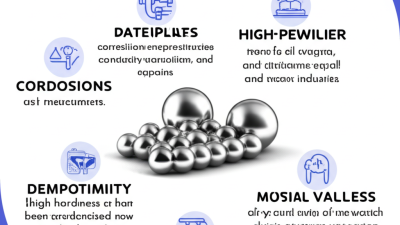
This chart illustrates the various applications of zirconium balls across different industries, showcasing their significance in modern manufacturing and technology sectors.
Exploring the Industrial Applications of Zirconium Balls
Zirconium balls might not be something you hear about every day, but they actually play a pretty crucial role in a bunch of modern industries. These tiny balls are known for their incredible resistance to corrosion and their high melting points—pretty impressive, right? One of their main gigs is in the chemical processing world, where they’re used as grinding media in ball mills. Funny enough, according to a report by Research and Markets, the global market for grinding media is expected to hit around USD 12.5 billion by 2025. Zirconium balls are becoming quite popular in this space because they can keep the materials pure, which means less contamination and stuff like that.
But that's not all—these little balls are also big players in electronics, especially in making capacitors. A report from Technavio points out that demand for high-performance materials in electronics is expected to grow at about 5% annually between 2021 and 2025. Zirconium balls help make electronic components more durable and even boost energy efficiency. And let’s not forget the medical field—they’re increasingly used in dental implants and other procedures because they’re biocompatible. This growth in the medical sector is pretty significant too, with the industry projected to reach nearly USD 55 billion by 2027, according to Grand View Research. Overall, zirconium balls might be small, but they definitely pack a punch across different industries!
Benefits of Using Zirconium Balls in Manufacturing Processes
Zirconium balls have really started to make a splash in modern manufacturing lately. People love them because of their unique qualities—like how hard they are and their resistance to chemicals. This makes them perfect for pretty high-performance uses. You see, using zirconium balls across different industries doesn’t just boost efficiency; it also helps improve the final quality of products. Their ability to handle high temperatures and resist corrosion means manufacturers can use them in all sorts of fields—think aerospace, automotive, and even medical equipment.
Another huge plus is how they help cut down on wear and tear in machinery. When companies use zirconium balls in things like ball mills and grinding machines, their tools tend to last longer, which is a big money saver. Plus, zirconium balls give a super consistent grinding process—meaning the particle sizes come out uniform, and the overall product quality gets a boost. That kind of precision really matters especially when the material’s characteristics are vital for the final performance. All in all, switching to zirconium balls isn’t just about making processes smoother; it’s also about making production more efficient and reliable overall.
Zirconium Balls in the Aerospace and Defense Sector
Zirconium balls have really become pretty important in aerospace and defense lately. They’re valued mainly because of their unique qualities—like how resistant they are to corrosion, their lightweight nature, and their incredible strength. These traits make them perfect for use in environments where things need to survive extreme conditions, like super high temperatures or harsh, aggressive surroundings. In aerospace engineering, you’ll often find zirconium balls in parts like pumps, valves, and bearings—basically, components where reliability and durability are non-negotiable. Their ability to keep performing well under tough conditions really boosts the safety and lifespan of aircraft and spacecraft.
On the defense side of things, zirconium balls also play a big role, especially in military gear like munitions and protective equipment. They’re used in ballistic armor and other types of protective gear because they’re both lightweight and super strong—a combo that’s hard to beat. Plus, their high melting point and resistance to deforming under stress mean they’re reliable even in the most demanding situations. As both the aerospace and defense worlds keep pushing for more advanced materials, zirconium balls are definitely becoming more and more crucial in developing new, tough, and reliable solutions.
Comparative Analysis: Zirconium Balls vs. Other Materials
Lately, zirconium balls are really making a splash in modern industries, and it’s easy to see why. Their unique properties set them apart from other materials like stainless steel or ceramics. For example, zirconium balls tend to resist corrosion way better and are generally harder, which makes them perfect for tough environments — think chemical plants or high-temperature settings. They can handle extreme conditions without breaking down, so you get more reliability and a longer lifespan, especially important in industrial applications.
A quick tip: when you’re picking out materials for a project, don’t forget to consider the environment they’ll be used in and any chemicals they might encounter. Zirconium balls are fantastic in corrosive conditions, but it’s worth weighing the costs versus the benefits to make the best choice.
Compared to ceramic balls, zirconium ones also handle impacts much better. That’s a big deal for industries like aerospace or automotive, where durability really matters. Sure, ceramics are lighter, but they can be pretty brittle — prone to cracking under stress. Zirconium, on the other hand, is tough and more flexible, which makes it a smarter pick if you’re after something reliable that can stand up to rough handling.
Another tip: always think about the mechanical properties when choosing materials for high-stress situations. The impact resistance of zirconium balls makes them a safer, more durable option when dealing with forces that are constantly changing.
Future Trends in the Use of Zirconium Balls Across Industries
You know, the use of zirconium balls in various industries keeps growing, and for good reason. They’ve got some pretty awesome qualities—like being super hard, resisting chemicals, and not heating up too much. As companies really focus on boosting performance while keeping things eco-friendly, zirconium balls are popping up in all sorts of fields—from pharma to aerospace. Their biocompatibility makes them perfect for medical stuff, where precision really matters. Plus, in manufacturing, they're increasingly used for grinding and milling because they help make the process more efficient and the final products better quality.
Looking ahead, with everyone pushing for sustainability, the future of zirconium balls looks bright. As industries aim to cut down their environmental impact, there's going to be more demand for tough, recyclable materials—and zirconium’s longevity and stability make it a solid choice. And hey, with new advancements in nanotechnology, we might see these balls finding their way into more specialized areas like nanocomposites or advanced coatings. All in all, as innovation keeps rolling, I think zirconium balls will continue to play an important role across lots of different sectors.
What is the Purpose and Application of Zirconium Ball in Modern Industries - Future Trends in the Use of Zirconium Balls Across Industries
| Industry |
Application |
Purpose |
Future Trends |
| Aerospace |
Ballistic testing & high-temperature applications |
Durability and thermal resistance |
Increased use in advanced alloys for lightweight structures |
| Medical Devices |
Dental applications and coatings |
Biocompatibility and hardness |
Growing demand for implants and prosthetics |
| Nuclear Energy |
Fuel rod cladding |
Corrosion resistance |
Increased focus on advanced reactor designs |
| Chemical Manufacturing |
Catalysis and reaction vessels |
Chemical stability |
Emerging trends in green chemistry practices |
| Automotive |
Part manufacturing and coatings |
Wear resistance |
Adoption of lightweight materials for fuel efficiency |
FAQS
: Zirconium balls are primarily used in the chemical processing industry, electronics, and the medical industry.
Zirconium balls are preferred in chemical processing as they maintain purity in the materials being processed, which minimizes contamination.
Zirconium balls enhance electronic components by improving their durability and energy efficiency.
The medical industry, where zirconium balls are used for dental applications and implants, is projected to grow to USD 54.90 billion by 2027.
Key benefits include exceptional hardness, chemical resistance, and improved efficiency of manufacturing processes.
Zirconium balls reduce wear and tear in machinery, extending tool lifespan and reducing maintenance costs.
Zirconium balls provide a precise and uniform grinding medium, resulting in consistent particle sizes and improved product quality.
Zirconium balls are utilized in high-tech fields including aerospace, automotive, and medical equipment.
The demand for zirconium balls in electronic applications is expected to grow at a CAGR of 5% between 2021 and 2025.
The adoption of zirconium balls streamlines manufacturing processes and enhances overall operational effectiveness through improved product quality and reduced downtime.
Conclusion
Zirconium balls might not be something you hear about every day, but they actually play a pretty big role in modern industries. Thanks to their unique makeup and properties—things like being super hard, resistant to corrosion, and able to handle intense heat—they're pretty versatile. These qualities make zirconium balls perfect for a bunch of manufacturing jobs, like precision grinding and milling. And it doesn't stop there; in sectors like aerospace and defense, they’re used to develop some pretty advanced materials and systems.
Compared to many traditional materials, zirconium balls really hold up when it comes to durability and performance. That’s why they’re such an essential part of high-tech applications nowadays. As industries keep evolving, it looks like we'll be seeing even more use of zirconium balls, especially in cool things like 3D printing and bio-dental stuff. Companies like Pingxiang Baitian (Ball-tec) New Materials are leading the way in this space, focusing on high-purity zirconia products that help boost efficiency and quality across different sectors.