Pingxiang Baitian New Materials Co., Ltd

Leave Your Message
Since industries are upgrading their materials and manufacture processes, the need for innovating newer materials is in increased demand. In this context, the role of the ZrO2 Ball Mill Jar becomes evident in the area of material grinding, particularly in fields where high precision and durability are required. According to a MarketsandMarkets report, the zirconia market is likely to witness a considerable rise with increased demand for advanced grinding materials for applications ranging from pharmaceuticals to ceramics and battery technology. This really portrays how vital the ZrO2 Ball Mill Jar has been and will keep being in satisfying very rigid quality requirements and efficiency in production.
Pingxiang Baitian(Ball-tec) New Materials Co., Ltd., a high-tech enterprise focused on zirconia and alumina micro-crystalline ceramic grinding media, would undoubtedly be the driver of this change. This company leads the field in innovating the manufacturing process due to its commitment to research and development and the production of high-purity zirconia powder. Groundbreaking innovations in ZrO2 Ball Mill Jars will be done by the year 2025 regarding enhanced performance and sustainability in grinding applications. In this way, innovations will change the way manufacturing is done and lay new ground for quality and reliability within this sector.
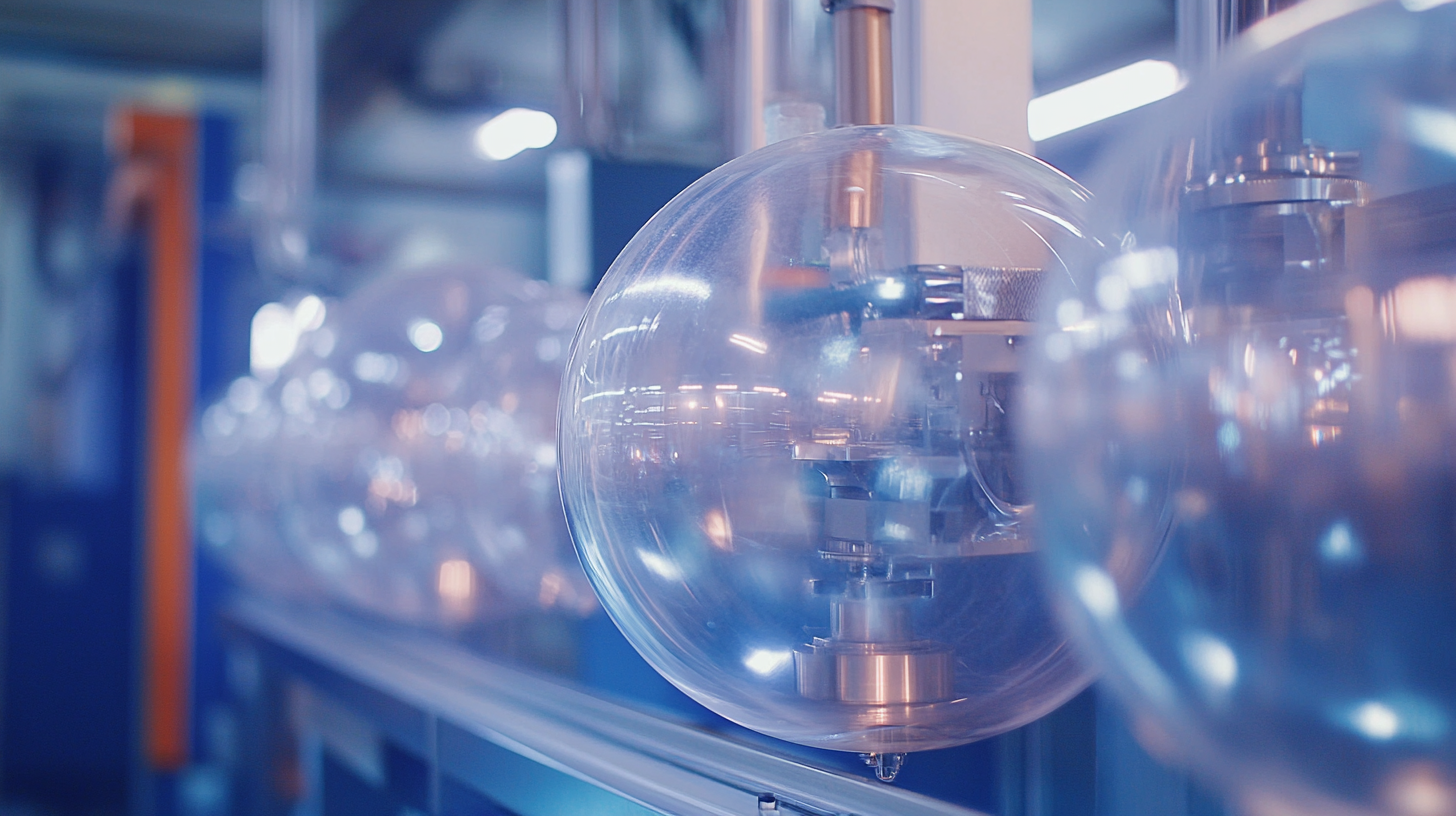
The production of ZrO2 ball mill jars is set for immense innovations when 2025 approaches. Manufacturing paradigms are redefined by emergent technologies in a manner that production becomes efficient, sustainable, and innovative. More importantly, the new wave is brought about by smart factories, where automation, data exchange, and management drive not only operational enhancement but also the quality improvement at output level. Artificial intelligence and machine learning are at the frontlines of these innovations, enabling manufacturers to optimize their processes in real-time. Higher precision in manufacturing of ZrO2 jars thus means the jars can be cut to specifications with extreme wastage in production minimized. Further, these technologies enable predictive maintenance, thus minimizing downtime and increasing the longevity of machines involved in creating these important tools. Advancement of material sciences has motivated development of the novel advanced ZrO2 composites, thus enhancing durability and efficiency in ball mill jars. Such novel formulations are made to withstand extreme conditions, thus providing better performance to the end-users. The industries will bring cutting-edge technology into its folds, thus making the competitive environment for ZrO2 ball mill jar manufacturing a more growing demand for quality materials across various sectors.
The manufacture of ZrO2 (zirconia) ball mill jars is undergoing its transition towards sustainable practices as the world transitions towards sustainability. By 2025, it is becoming inevitable for organizations focused on being competitive in this industry to adopt environmental practices; this revolution has been sparked by raising customer demand for sustainable products as well as increased environmental regulations that make manufacturers rethink their sourcing and production practices.
One such innovation is the production of ZrO2 from renewable raw materials. Companies are diverting their products away from traditional zircon for recycled materials in their process. It minimizes waste generation while reducing greenhouse emissions at the level of upstream raw material collection and processing. With the advent of improved technology, there are also energy and resource-conserving production techniques that are being developed.
Moreover, the structure of the ZrO2 ball mill jars gets changed to reduce their lifespan and improve their functionality. The manufacturers are concerned about soundness and recyclability, so once these jars become waste, they will be able to reuse or recycle them effectively. The adoption of such sustainable trends by the ZrO2 industry will not only enhance its environmental performance but create a manufacturing realm consonant with the tastes and preferences of customers as well as regulators.
The evolution of zirconia (ZrO2) balls mills jars has made even greater strides in the aspect of material science in the pathway of higher durability performance. A recent report published by Markets and Markets suggests that the global ceramics market will grow at a CAGR of 6.6% over a period of 2020-2025 primarily because of innovations in material properties in advanced applications of ceramics such as ZrO2. Now, these developments have transformed the mechanical and chemical resilience of ball mill jars to use in several industries, including pharmaceuticals and nanotechnology.
The supreme focus for manufacturers is on enhancing durability in ZrO2 ball mill jars to attain this intent effectively in longer grinding operations. The Journal of the American Ceramic Society contends that modified ZrO2 compositions demonstrate improved toughness and wear resistance, thus leading to an increase in operational life before the need for replacement. As mill configuration continues to evolve, the application of these new materials can lead to quite extraordinary savings.
Sustainability is thereby becoming increasingly relevant to the continuous innovation of products from ZrO2. With industries leaning more toward greener ways of operation, an emerging trend is developing an environmentally friendly way of producing ZrO2 ceramics. Cleaner production technology could reduce hazardous emissions by as much as 30% and further improvements in the ZrO2 innovation would only ensure that these advancements are in line with global sustainability efforts. Innovations such as these create ZrO2 ball mill jars in the vanguard of manufacturing for 2025 and beyond.
Following increased academic concentration and industry attention, ZrO2 ball mill jars will undergo drastic changes in the immediate future due to innovative design techniques intended to improve performance and across-the-board application in a varied realm of commercial activity. Research that included advancements such as aerodynamic or magnetic levitation through atomic force microscopy techniques has compelled study in the possible creation of enhanced ball mill jars capable of withstanding greater withstanding high pressures and making milling in the mill much more efficient. An underlying aim in the study of such materials with high wear resistance such as nonmetallic attach materials, spoke hence of a stronger-than-earnest concern for enhancing the life and durability of this technology-based equipment.
Yet construction of ZrO2 ball mill jars, for instance, has not previously been combined with catalytically active components that could efficiently control chemical transformations of these jars. Hence interest in this area will inevitably cause additives within the jars to power through the chemical transformation, as an increasing number of research undertakings are now having engineers for green/environment-favorable catalysis in making cool SA catalysts. Also, advanced research in morphology will pinpoint the preferable positions of the jar in the substrate�milled substrate interface in order to enhance the quality and uniformity of the product with the minimum possible contamination.
So it could be that the jar used for a ball mill made of ZrO2 might become a anticipated receptacle for, amongst others, the next serious set of related research findings backed with new exciting methods in designing those as well as the vice versa. An intersecting point of many interdisciplinary disciplines must be created by these new developing stages�precipitated by not only material science and engineering, but also engineering and industry practitioners who are considering where the ZrO2 ball mill jars could fit modern-day industry demands in ever-expanding markets.
The entire production scenario in ZrO2 manufacturing will change in 2025, when the entire process will be automated to enhance its efficiency and precision fundamentally. Robotics and artificial intelligence are being integrated into manufacturing processes so well that there will no longer be a need for human intervention in certain manufacturing operations, such as in ZrO2 ball mill jars production, where uniformity of quality and consistency is paramount. Parameters can be controlled, monitored, and adjusted in real-time by automated systems so that, at the final output, every jar conforms to specifications without the involved variability of manual processes.
The scope of automation does not end in providing efficiency-only products, but goes further to define innovation in design and functionality. Advanced data analytics will enable manufacturers to use insights from production data to fine-tune designs and thus enhance the physical properties of ZrO2 jars for specific applications. For example, better automation will allow trials of new material combinations or coating techniques that will improve durability and performance in various milling functions.
But with industries increasingly green, there is less waste cumulatively and reduced energy spent during the overall manufacturing process, which will further be about decreasing energy footprint per ZrO2 product. Increasingly, such smart automation solutions sustain resource optimization for global sustainability objectives while maximizing production levels against rising market demand for the products. It furthermore sets the paradigm of industry of the future, with ZrO2 manufacturing enjoying increased energy efficiency as well as incorporating sustainable practices.
The landscape of ball mill jars, particularly those made from zirconia (ZrO2), is undergoing significant transformations driven by evolving market demands. There has been significant interest in high-performance materials that enhance efficiency and product quality in the ceramics and materials science industries in recent years. "The 2022 market analysis published by Research and Markets projects that the global demand for zirconia products will grow at a compound annual growth rate (CAGR) of 6.5% through 2025; that underscores the importance of innovation in this sector."
Manufacturers are now focused on features specific to the demand. The primary expectations remain on enhanced durability and wear and tear resistance. ZrO2 ball mill jars are being engineered for advanced microstructural properties that enhance their life while preserving low contamination during the milling processes. According to the report by Grand View Research, mills using high-quality ZrO2 jars can limit material loss to 15% less, a significant consideration among industries dealing with fine materials.
It is becoming apparent that the design and manufacturing of ZrO2 ball mill jar also have to be done with sustainability in mind. Environmental regulations are becoming more stringent, and manufacturers are adopting green technologies such as the use of recycled materials and energy-efficient production processes. The 2023 report by Industrial Analysis mentioned that companies promoting sustainable practices are expected to hold a competitive advantage as environmentally conscious consumers emerge. Hence, ZrO2 ball mill jar performance will be put under scrutiny for their correspondence towards environmentally-responsible attitude in the stronger sense.
Smart technology will greatly impact ZrO2 production by 2025. Data analytics, automation, and IoT are changing the paradigm of antiquated processes by introducing efficiency and accuracy to the making of zirconium dioxide ball mill jars. MarketsandMarkets recently reported that smart manufacturing, in which production processes are becoming increasingly technology-oriented, is projected to rise from $200 billion in 2020 to over $380 billion by 2025.
One of the most significant innovations in ZrO2 production has been the establishment of real-time monitoring systems using IoT devices for data collection on manufacturing parameters. According to a study published in the Journal of Manufacturing Processes, if properly implemented, these systems can increase the effective production of ZrO2 by 30%, thereby helping manufacturers identify and eliminate anomalies as soon as possible. Such a capability greatly reduces downtime while allowing for superior quality, both of which are critical elements for companies in a competitive marketplace.
Furthermore, by using artificial intelligence-assisted quality control processes, predictive maintenance comes into play in ZrO2 production plants. AI algorithms analyze historical data to determine equipment failure, driving down costs associated with maintenance and unplanned outages. As McKinsey & Company reported, predictive maintenance can cut maintenance costs by 10-40% and increase the lifetime of machinery, thus altering the very essence of the industry's operating dynamics. With the unfolding of these innovations, ZrO2 manufacturing is geared increasingly towards smart and efficient systems by 2025.
ZrO2 ball mill jars will see transformative innovations towards 2025. Regulation presents challenges and opportunities that will shape this dynamic. The ceramic materials market, including ZrO2, is projected to grow at a massive pace, with 2022 marking the estimated value at $1.1 billion and an expected $1.8 billion by 2030 with a CAGR of 6.3% for 2024-2030. This growth emphasizes the need to abide by regulatory standards that guarantee product safety and efficacy as manufacturing trends toward sustainability.
Guangdong and other parts of China are rapidly embracing digital transformation, which translates to efficiency improvement for their industries. As digital transformation gains prominence, manufacturers of ZrO2 ball mill jars will now need to align their operations with new technologies that enhance production processes and satisfy the regulatory framework with utmost efficiency. In doing so, the cost-benefits enable these companies to raise their international standards and therefore compete in emerging markets.
Increased regulatory scrutiny in markets like Japan is holding conversations about possible improvement in quality standards applicable to manufacturing. The very idea of "Japan Made" marks the ushering in of a new era of manufacturing, warranting that firms producing ZrO2 products will endure an increased burden of scrutiny. While this is fast becoming a challenge, it is also fast becoming the opportunity to foster more advanced innovations and differentiation in the manufacturing environment, thereby engaging manufacturers to invest in modern technologies and sustainability. Therefore, the future approach to ZrO2 ball mill jar design and technology by 2025 may provide huge room for compliance requirements and innovative production techniques in defining a new industrial standard.
The market for the ZrO2 ball mill jars is anticipated to grow substantially in several fields by 2025. ZrO2 (zirconium dioxide) is an extensive high-performance demand material and familiarizes itself particularly by its unique properties, such as high hardness, wear resistance, and chemical stability during processes with high energies. Such conditions accentuate on performance improvement in structures ranging from ceramics to pharmaceuticals, contributing to buoyant performance in a market segment where applications attain massive portions.
The requirement of finely milled powders is highly relevant for the ceramics industry. Hence, ZrO2 ball mill jars can be used for producing such mixtures, which are more uniform, homogeneous, and likely to yield better quality final products. There is also the pharmaceutical industry that appreciates the accuracy and cleanliness brought about when working with active ingredients by using ZrO2 jars. Their non-reactive nature ensures that there is no contamination, thus offering better integrity of formulation for drugs. This increased dependence on the jars at the same time reinforces the importance of these materials in achieving stringent regulations in product output and optimum efficacy.
Manufacturing process advancements are also expected to boost the ZrO2 ball mill jar market. Novel technologies like additive manufacturing and enhanced sintering can eventually bring about leaner production methods at reduced costs while producing high-quality output. As industry doodles towards sustainable and circular economy practices, the recyclability of ZrO2 is also contributing to its increasing acceptability. The intersection of these aspects indicates a very good promise for ZrO2 ball mill jars in the configuration of manufacturing landscapes across sectors by 2025.
Another notable change in the manufacture of Zirconium Dioxide (ZrO2) ball mill jars will occur. The spectrum of activity within this technology is increasingly filled with application-driven innovations resulting from joint collaboration between researchers and manufacturers; they stand to gain effective functionality and efficiency from innovations. Academic research and practical industrial applications together will bring about a new generation of ZrO2 products characterized by greater durability, lesser wear rates, and out-of-the-box performance in grinding operations.
Research is being conducted into differing compositions and processing routes by which mechanical properties of the ZrO2 ball mill jars could be enhanced tremendously. These could involve advanced methods such as additive manufacturing or nanotechnology, which serve to provide engineered solutions to very peculiar problems found in varying industrial applications. Such innovations would not only promise longer-life jars, but also reduced energy consumption during the milling operation, hence a more sustainable manufacturing process.
On the other hand, manufacturers are enthusiastic about picking up on these advances and carrying out the research into production at scale. This cooperative method is ensuring that theoretical advancements will find a place in practice. Constant interaction between academia and industry will create a loop of improvements toward 2025, making way for a smarter and much more resilient manufacturing ecosystem. The future now looks bright for the collaboration between these parties concerning the ZrO2 ball mill jars, ushering in a new era of manufacturing excellence.
Automation is expected to enhance efficiency and precision in ZrO2 manufacturing, streamlining operations, reducing human error, and ensuring uniform quality in production processes.
Automation reduces waste and energy consumption throughout the manufacturing lifecycle, optimizing resource usage and aligning with global sustainability goals while meeting the demand for high-performance ZrO2 products.
Regulatory standards are crucial for ensuring product safety and efficacy, as the market for ZrO2 expands. Manufacturers must comply with these standards to remain competitive and to enhance their production processes.
Digital advancements are enhancing industrial efficiencies, prompting ZrO2 manufacturers to adopt new technologies that improve production and comply with regulatory frameworks.
Regulatory challenges can drive innovation and differentiation, prompting manufacturers to invest in advanced technologies and sustainable practices to meet evolving standards.
Researchers are focusing on new compositions and processing techniques, while manufacturers leverage these findings to create scalable production methods, leading to improved durability and performance in ZrO2 ball mill jars.
Techniques such as additive manufacturing and nanotechnology are being researched to improve mechanical properties, extend lifespan, and optimize energy consumption during milling operations.
Collaboration fosters continuous improvement, ensuring that theoretical advancements are integrated into practical applications, which leads to a smarter and more resilient manufacturing ecosystem.
The market for ZrO2 is expected to grow from approximately $1.1 billion in 2022 to $1.8 billion by 2030, with a compound annual growth rate (CAGR) of 6.3% from 2024 to 2030.
The new generation of ZrO2 products is anticipated to feature improved durability, reduced wear rates, and enhanced performance in grinding processes, driven by innovative research and collaboration.