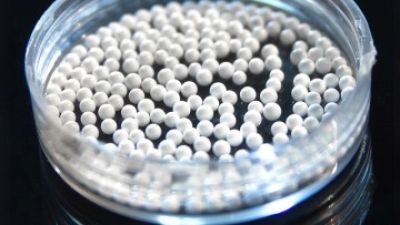
You know, there's been a pretty steady jump in demand for High Purity Alumina Balls across different industries. I recently came across a report from Research and Markets, and it predicts the global market for these high purity alumina balls will hit around USD 1.56 billion by 2026. That’s quite a leap, and honestly, it really shows how much industries like electronics and ceramics are now craving top-quality materials.
These high purity alumina balls are a big deal because they perform better when it comes to things like handling heat and resisting wear and tear. Companies like Altech Chemicals Limited and Huber Engineered Materials have definitely seen the value in using them. But, of course, it’s not all smooth sailing. To really meet industry standards, the purity levels often need to be above 99.99%, which isn’t easy.
On top of that, jumping into production isn’t just about the money — there are environmental challenges too. Companies need to rethink their processes to be more sustainable, which can be a tall order. As this market keeps growing, the need for fresh, innovative ideas is only going to become more urgent. Basically, it’s about finding that sweet spot between making high-quality products and being responsible about how we do it.

Understanding High Purity Alumina Balls and Their Applications
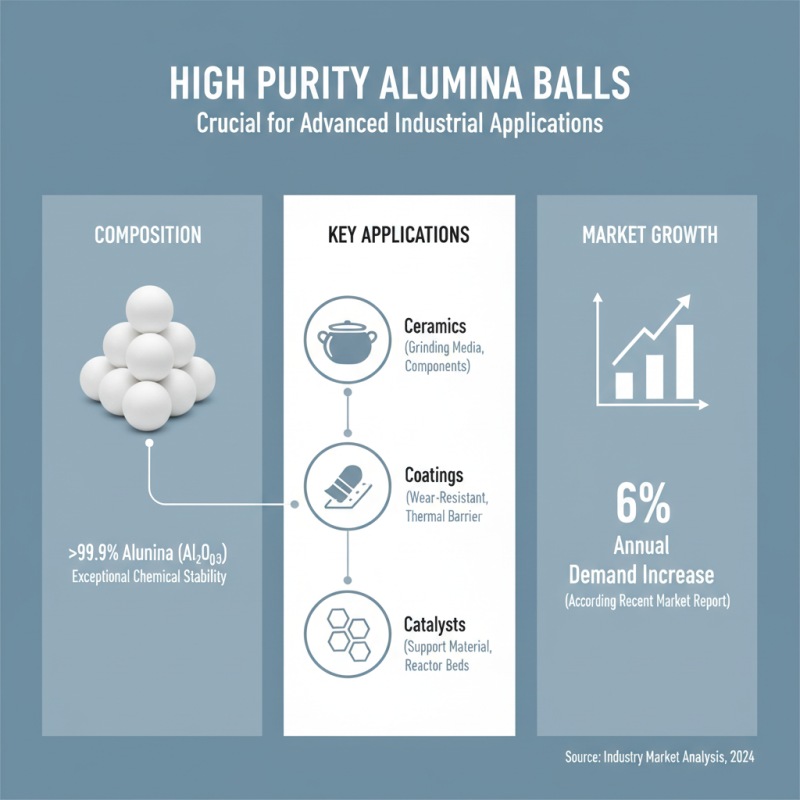
High purity alumina balls play a crucial role in various industries. Their composition, typically over 99.9% alumina, contributes to exceptional chemical stability. This makes them ideal for applications in ceramics, coatings, and even catalysts. According to a recent market report, the demand for these specialized materials is projected to rise by 6% annually.
In the ceramics industry, high purity alumina balls are vital for producing advanced ceramic components. They enhance the mechanical strength and thermal stability of products. Furthermore, in catalytic applications, these balls serve as support materials, improving the efficiency of chemical reactions. Interestingly, some studies indicate that the effectiveness of high purity alumina can vary based on production methods.
However, not all high purity alumina balls are created equal. Variations in production techniques can lead to inconsistencies in performance. The absence of standardized testing methods is a significant concern. This can frustrate manufacturers aiming for quality assurance. Stakeholders in the industry must be aware of these challenges and consider further research for optimization.
Key Benefits of High Purity Alumina Balls in Industry
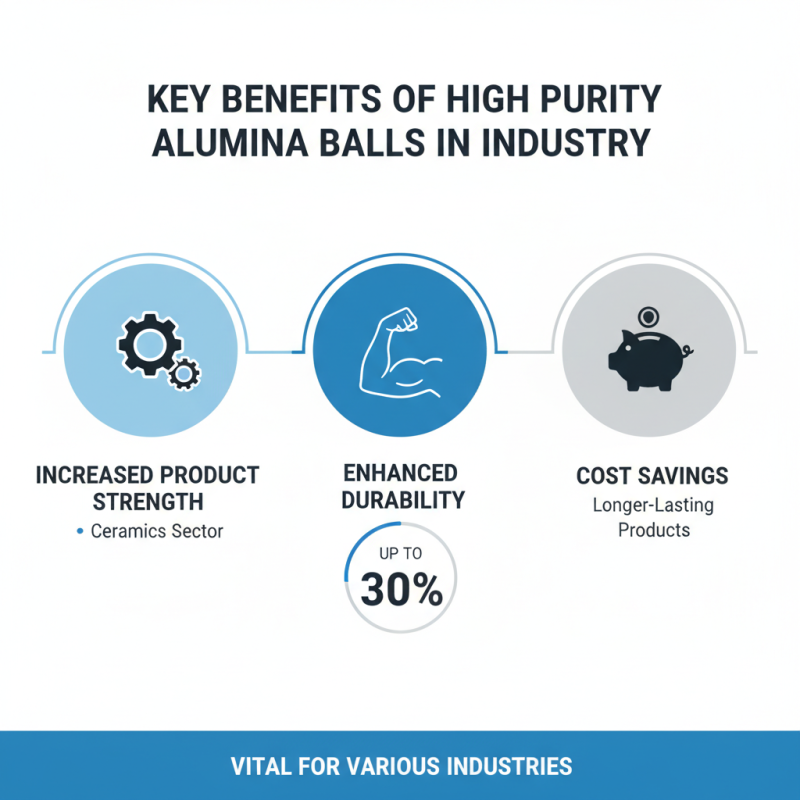
High Purity Alumina Balls are becoming increasingly vital in various industries. These materials offer numerous benefits. In the ceramics sector, they improve product strength and durability. Statistics show that they can enhance the mechanical properties by up to 30%. This improvement can lead to longer-lasting products, ultimately saving costs.
In the chemical industry, High Purity Alumina Balls are used as catalysts. They facilitate reactions and ensure higher yield rates. A recent report noted that using these alumina balls can increase efficiency by 20% in certain processes. However, not all applications have harnessed this potential. Some companies struggle to adopt these technologies fully. They might not realize the importance of investing in high-quality materials.
The use of High Purity Alumina Porcelain Balls in production is becoming standard. Their corrosion resistance leads to a lower failure rate. Yet, challenges remain. Industries often overlook the need for thorough research and testing. Ultimately, recognizing the benefits while addressing the potential drawbacks will drive further innovation.
Factors Affecting the Performance of Alumina Balls
When discussing the performance of alumina balls, several key factors come into play. The purity level of alumina significantly affects its functionality. High Purity Alumina Balls, for instance, provide better mechanical strength and thermal stability. Reports indicate that alumina purity levels of over 99.5% can lead to improved abrasion resistance and a lower rate of particle breakdown. This is crucial in industries like ceramics, where durability matters.
Another critical element is the manufacturing process. The method of production impacts the microstructure of the alumina balls. A finer microstructure often leads to better performance characteristics, such as increased surface area for reactions. It’s essential to evaluate the sintering temperatures used, as they can affect the final product quality.
Tips for selecting alumina balls include checking the particle size distribution. Uniformity in size ensures consistent performance. Another tip is to consider the specific application requirements. Not all alumina balls suit every use, and misalignments can result in inefficiencies. Understanding the intended use will help in choosing the best option. Aiming for the right High Purity Alumina Bead can save time and resources in the long run.
Comparison of High Purity Alumina Balls with Other Materials
High purity alumina balls are gaining traction in various industries due to their exceptional properties. They are commonly compared to other materials like silica and ceramic balls. Recent industry reports suggest that high purity alumina balls have a significantly lower wear rate than silica balls. This results in extended service life and reduced maintenance costs.
When evaluating these materials, it’s important to consider their specific applications. For instance, high purity alumina balls excel in high-temperature environments. They can withstand temperatures up to 1700°C, unlike traditional materials that may degrade under similar conditions. This capability is crucial for industries such as ceramics and electronics, where reliability is paramount.
Tips: When selecting high purity alumina balls, assess their chemical stability in your application. Look for specifications that align with your operational needs. Always prioritize sourcing quality materials to ensure structural integrity and efficiency. Embrace technological advancements that can improve your processes. Reflect on the cost versus performance ratio before making a final decision.
Tips for Selecting the Right High Purity Alumina Ball
When selecting high purity alumina balls, consider several key factors. The size of the alumina balls is critical. Smaller balls offer a larger surface area, enhancing efficiency in various applications. Larger balls might be more durable but can reduce surface interaction. This choice depends on specific project needs.
Another important aspect is the quality of the High Purity Alumina Powder. Ensure it meets your required specifications. Impurities can affect the performance and longevity of the balls. Be cautious; not all suppliers provide detailed information. Look for certifications or lab results that confirm purity levels.
Cost is often a concern, but cheaper options might compromise quality. Sometimes, investing more upfront leads to better results and savings in the long run. Remember, not every supplier is transparent. Taking time to research and compare will pay off. Ultimately, understanding your needs is key to making the right choice.
High Purity Alumina Ball Performance Comparison
Maintenance and Care for Optimal Performance of Alumina Balls
Alumina balls are vital in various industrial applications, particularly for their durability and thermal stability. Proper maintenance ensures they perform optimally. Frequent inspections should take place to detect wear and tear early. A study by the Ceramic Industry predicts that proper maintenance can increase the lifespan of alumina balls by 50%.
Cleaning is essential. Contaminants can significantly reduce the efficiency of alumina balls. Using mild detergents and warm water can help maintain their purity. However, avoid aggressive chemicals that may corrode their surface. Regular checks on pH levels can prevent degradation.
Storage conditions also matter. High humidity can affect the balls' integrity. Keeping them in a dry, controlled environment is crucial. A report from Materials Science highlights that neglecting environmental factors can lead to a 30% reduction in performance. Overall, a commitment to proper care and maintenance is necessary to achieve maximum efficiency.
High Purity Alumina Ball Tips for Enhanced Performance
| Dimension |
Specification |
Performance Metric |
Maintenance Tips |
| Diameter (mm) |
3 - 50 |
Uniformity analysis |
Regular cleaning with pH neutral solution |
| Hardness (Mohs) |
9 |
Impact resistance |
Avoid exposure to extreme temperatures |
| Density (g/cm³) |
3.95 |
Load-bearing capacity |
Store in a dry environment |
| Purity (%) |
99.99 |
Chemical interaction strength |
Check for signs of abrasion regularly |
Innovative Uses and Future Trends in High Purity Alumina Ball Technology
High purity alumina balls are gaining traction in various industries. Their unique qualities enhance performance in applications like ceramics, electronics, and chemical processes. As technology evolves, these materials find innovative uses. More companies explore how high purity alumina can optimize their manufacturing processes.
Tips for maximizing the benefits of high purity alumina include using the right size beads for your grinding needs. Selecting appropriate media can lead to better yield and reduced processing time. Experimenting with different environments may also reveal unexpected advantages. Not every application benefits equally from high purity alumina grinding beads, and some trial and error may be necessary.
Moreover, the future trends of this technology look promising. Emerging industries are likely to adopt high purity alumina due to its superior mechanical properties. Researchers are constantly discovering new formulations that increase efficiency and sustainability. However, careful consideration is needed to assess the impact on end products and overall performance. Continuous innovation is vital to address potential shortcomings in current applications.
Enhancing Mining Efficiency: The Impact of Zirconia Alumina Composite Beads on Grinding Performance and Cost Reduction
The mining industry continuously seeks ways to enhance efficiency and reduce operational costs. One significant innovation contributing to this objective is the use of zirconia alumina composite beads in grinding processes. These advanced grinding media, made from modified zirconia powder, offer remarkable durability and performance advantages in mineral processing applications.
According to industry reports, the implementation of zirconia alumina composite beads can lead to a substantial improvement in grinding efficiency. Studies indicate that the use of these beads can reduce wear rates by up to 30% compared to traditional media, translating to longer operational life and less frequent media replacements. This not only optimizes the grinding process but also significantly decreases the overall cost of production, as less downtime and lower maintenance requirements are achieved.
Furthermore, the high density and strength of zirconia alumina composite beads facilitate finer particle size reduction, which is essential for maximizing recovery rates of valuable minerals. Reports suggest that optimizing the grinding process through the use of these media can enhance mineral liberation, potentially leading to recovery improvements of around 15% on average. As the mining sector increasingly emphasizes resource efficiency and cost-effectiveness, the adoption of advanced grinding technologies like zirconia alumina composite beads is shaping the future of mineral processing.
FAQS
lumina Balls in the ceramics industry?
They act as catalysts, facilitating reactions and increasing yield rates by about 20%. However, some industries struggle with full adoption.
Many companies overlook the need for thorough research and testing. This can limit their understanding of the material's potential.
Higher purity levels lead to better mechanical strength and thermal stability. Purity above 99.5% improves abrasion resistance significantly.
The method affects the microstructure of alumina balls. A finer microstructure usually results in improved surface area for reactions.
Check particle size distribution for uniformity and align with specific application requirements. Misalignments can cause inefficiencies.
They have a much lower wear rate than silica balls, leading to longer service life and reduced maintenance costs.
They can withstand temperatures up to 1700°C, outperforming traditional materials that may degrade under such conditions.
It ensures that the material will perform effectively in your application. Quality materials are crucial for maintaining structural integrity.
Consider the cost versus performance ratio. This can significantly impact efficiency and resource management in the long run.
Conclusion
High purity alumina balls are advanced materials widely utilized in various industrial applications due to their exceptional properties. These balls offer key benefits such as high abrasion resistance, chemical stability, and low density, making them ideal for use in catalytic reactions, grinding processes, and as supports in various chemical reactions. The performance of high purity alumina balls can be influenced by factors such as particle size, sintering temperature, and environmental conditions.
When selecting the right high purity alumina ball, it is essential to consider application-specific requirements and compatibility with other materials. Proper maintenance and care can significantly enhance the longevity and effectiveness of these alumina balls. Additionally, ongoing innovations in high purity alumina ball technology are revealing new uses and trends, promising to further enhance their performance in diverse applications. Overall, high purity alumina balls represent a crucial advancement in material science for industries seeking improved efficiency and reliability.