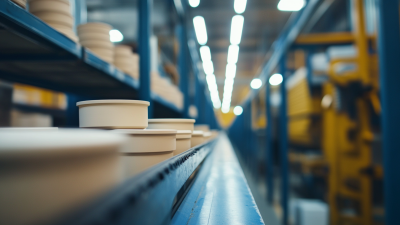
Hey there! You know, these days, the demand for
top-notch structural ceramics is really on the rise.
It’s all about needing new materials that can handle a variety of industrial challenges.
At the forefront of this movement is Pingxiang Baitian (Ball-tec) New Materials Co., Ltd.,
a cutting-edge company that’s all about research, development, and sales of advanced ceramic solutions.
We specialize in zirconia and alumina microcrystalline ceramic grinding media,
along with bio-dental stuff, solid fuel cells, and high-purity zirconia powder.
That’s what makes us a big name in the ceramics export scene!
Our motto, "Chinese manufacturing wins global respect through quality." really drives us to provide businesses with
the best structural ceramics that meet their unique needs. We’re all about durability, performance,
and making a positive impact on sustainability in various industries.
Top 5 Countries Dominating the Global Supply of High-Quality Structural Ceramics
You know, the global market for high-quality structural ceramics is really taking off! It’s all thanks to a surge in demand from various industries. In fact, projections show that the advanced ceramics market could hit around USD 16.27 billion by 2029, which is a pretty impressive jump from USD 12.16 billion in 2024, marking a solid 6.0% growth rate per year. What’s driving this boom? Well, it’s a mix of sectors like construction, aerospace, and automotive all looking for materials that are not just durable but also sustainable and high-performing.
When you look at the top countries in the structural ceramics scene, a few key players really shine. These nations have made their mark as not just big producers but also as innovators in ceramic technology. They've got the goods that meet some of the highest standards out there. With globalization and changing trade dynamics, these countries have really cemented their status as top exporters, making sure that companies around the globe can tap into the latest and greatest in structural ceramics to fit their specific needs. As various industries continue to adapt to shifts in supply chains, it looks like these five countries are set to lead the charge and shape the future of advanced ceramics. Pretty exciting times, right?
Key Factors Driving the Success of Leading Structural Ceramic Exporters
You know, the success of the leading structural ceramic exporters really boils down to a few key factors that give them a competitive edge in the global market. For starters, one of the big drivers is the ongoing advancements in manufacturing technologies—especially when it comes to those lightweight composite structures. Nowadays, businesses are on the lookout for more efficient materials, so those exporters who are smart enough to invest in innovative practices and the latest tech are in a much better spot to meet these growing demands. Not to mention, this commitment to manufacturing excellence not only boosts quality but also helps improve the economic status of the countries involved in this industry.
And here’s the interesting part: global market trends are pointing towards a significant growth path for ceramic products. In fact, projections suggest that GCC ceramic tiles could see a compound annual growth rate of about 7.3% by 2030! Pretty cool, right? This optimistic outlook is really fueled by the rising consumer demand for beautifully designed, well-crafted goods. Companies that pick up on this untapped potential and adjust their production strategies accordingly can really capitalize on this growing trend, which definitely strengthens their market position. So, it's clear that the mix of innovation, shifting consumer preferences, and smart investments are super important in driving the success of structural ceramic exporters on the world stage.
7 Essential Properties of Structural Ceramics for Business Applications
So, when you're looking at structural ceramics for business use,
it's super important to really get a grip on their key properties. First off,
high strength is a biggie!
These materials can handle heavy loads and they resist bending and breaking, which is
crucial in industries like aerospace and
automotive where safety and performance are everything.
And let’s be real — we definitely don’t want anything failing up there in the sky or while
we’re cruising down the highway.
Plus, structural ceramics are known to hold up really well at high temperatures.
They can thrive in situations where metals would just quit on you, which is pretty impressive. Another standout feature
is their corrosion resistance. This means they can survive in tough
chemical environments, and that’s especially important in manufacturing, where materials are often exposed to harsh
substances that can break them down quickly.
Oh, and don’t overlook the low thermal conductivity!
This property makes structural ceramics great insulators. Whether it’s for electronic components or
thermal barriers in engines, they really come through. By tapping into these amazing properties, businesses can
level up their processes and extend the life and reliability of their products.
In the grand scheme of things, structuring ceramics really do make a lot of sense for today’s industries.
Why Quality Control is Crucial for Exporting Structural Ceramics Globally
So, in this crazy competitive world we’re in, especially when it comes to exporting structural ceramics, quality control is absolutely a must-have. There’s this report from Research and Markets that shows the global ceramics market is expected to hit a whopping $48.74 billion by 2026, which really underscores how much people care about high-quality products these days. Structural ceramics are pretty amazing—they have fantastic mechanical properties and can handle heat like champs. They’re super important across a bunch of industries like aerospace, automotive, and even medical fields.
Take Pingxiang Baitian (Ball-tec) New Materials Co., Ltd., for instance. They really shine in this area by focusing on high-purity zirconia and alumina microcrystalline ceramic grinding media. We take quality control really seriously here, making sure our products hit those international standards so we can meet the high expectations of our global customers. We’ve got some cutting-edge manufacturing techniques and thorough testing processes in place that not only make our products tougher but also help build trust with our clients. And let’s be real: as the structural ceramics market keeps growing, keeping our quality assurance on point is more crucial than ever if we want to stay competitive out there.
Global Exporters of Structural Ceramics: Quality Control Impact
The Role of Innovation in Enhancing Structural Ceramic Manufacturing Processes
When it comes to making structural ceramics, innovation is key, especially in the ever-evolving world of semiconductor ceramics. Lately, we’ve seen some pretty exciting breakthroughs in ceramic printing technology that are finally tackling some of the age-old issues the industry has been dealing with. At the recent ceramics conference focused on semiconductors, for example, experts were showing off some really cool, innovative techniques to craft advanced materials that are not only super efficient but also meet the growing complexities of today’s tech landscape.
And let me tell you, emerging technologies like 3D ceramic printing are seriously shaking up the traditional manufacturing game. These new methods bring a whole new level of customization and precision to structural ceramics, which is crucial for all sorts of applications in electronics and beyond. It was also great to see the fresh faces of young tech innovators get some recognition in the latest MIT Technology Review. It really highlights how dynamic and full of potential this sector is right now. Their contributions are poised to lead the way in evolving structural ceramic materials, keeping them at the cutting edge in terms of manufacturing efficiency, performance, and sustainability.
Leading Global Exporters of Best Structure Ceramics for Your Business Needs - The Role of Innovation in Enhancing Structural Ceramic Manufacturing Processes
| Country |
Annual Export Value (USD) |
Innovation Index Score |
Key Technologies Used |
Growth Rate (Annual %) |
| Germany |
2,500,000,000 |
85 |
3D Printing, Nano-coating |
5.2 |
| USA |
3,000,000,000 |
90 |
Advanced Ceramics, AI Integration |
6.5 |
| Japan |
1,800,000,000 |
88 |
Smart Manufacturing, Robotics |
4.8 |
| China |
4,200,000,000 |
82 |
Digital Fabrication, Sustainable Materials |
7.1 |
| Italy |
1,200,000,000 |
80 |
Traditional Craftsmanship, Modern Design |
3.9 |
Understanding Market Demands: Trends Influencing Structural Ceramic Exports
You know, in the last few years, we've really seen a boom in the demand for structural ceramics. It's mostly thanks to all the tech advancements and that growing awareness of how beneficial these materials can be across a bunch of different industries. Products made from structural ceramics are becoming the go-to choice because they offer this amazing balance of strength and lightweight properties, plus they resist corrosion and are super durable. That's why they're perfect for fields like aerospace, automotive, and construction. As companies search for fresh, innovative ways to up their game and be more sustainable, it’s more important than ever for suppliers and manufacturers to understand the market trends that are shaping ceramic exports. They definitely want to make sure their offerings align with what customers are looking for.
One noteworthy trend we've been seeing is the push toward eco-friendly materials. This movement is really gaining speed, paving the way for manufacturers to pour resources into eco-efficient production processes. It's a smart move that not only helps tackle all those regulatory pressures but also caters to the rising consumer demand for sustainable options. Plus, emerging markets are ramping up their infrastructure projects, which creates a big need for high-quality structural ceramics. Companies that can pivot and adapt to these changing market dynamics will definitely find a sweet spot, keeping their products competitive in an ever-evolving landscape. Honestly, the mix of innovation and sustainability is key if stakeholders want to grab a piece of the global ceramics export pie.
FAQS
: The success of structural ceramic exporters is driven by advancements in manufacturing technologies, particularly in lightweight composite structures, and their focus on innovation, quality, and strategic investments in response to global market trends.
The compound annual growth rate for GCC ceramic tiles is projected to be 7.3% by 2030.
Structural ceramics are favored for their exceptional strength-to-weight ratio, corrosion resistance, and durability, making them ideal for applications in aerospace, automotive, and construction sectors.
Market demands are influencing production by driving manufacturers to align their offerings with customer needs, especially in terms of performance, sustainability, and innovative applications.
The trend toward environmentally friendly materials and growing consumer demand for sustainable products is prompting manufacturers to invest in eco-efficient production processes.
Emerging markets are experiencing a significant increase in infrastructure projects, leading to a higher requirement for high-quality structural ceramics which boosts their demand.
Growing consumer preference for beautifully designed and well-crafted goods is essential for companies to capture increased market share and enhance their competitive position.
Companies can position themselves favorably by adapting to market dynamics, focusing on innovation and sustainability, and aligning production strategies with current and future consumer trends.