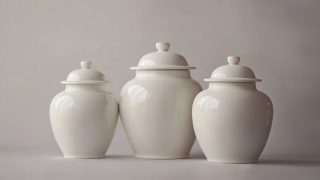
When it comes to cutting-edge material processing, the success of your grinding often depends a lot on the quality and type of parts you use — especially the Ceramic Jar for your Planetary Ball Mill. Here at Pingxiang Baitian (Ball-tec) New Materials Co., Ltd., we’re proud to offer high-tech ceramic solutions that really boost grinding performance and help you get the best results. We focus on zirconia and alumina microcrystalline ceramic grinding media, so our products can stand up to the toughest demands — whether you're working on bio-dental materials, solid fuel cells, or other tricky applications. In this blog, I’ll share five solid reasons why having a ceramic jar for your planetary ball mill is a total game-changer for better efficiency, durability, and overall product quality. Stick around as we explore how these ceramic jars are key to maximizing your milling productivity and giving you that extra edge in your material processing.
Benefits of Ceramic Jars in Planetary Ball Mills
Ceramic jars have really become a key part of making planetary ball mills work efficiently. They come with quite a few perks that seriously boost the milling process. For starters, one of the biggest pluses is their durability. Unlike some other materials, ceramics can handle those intense mechanical forces during milling without breaking easily. That means they last longer, which is a big win because it saves you money on replacements and gives you consistent results over time.
And here's another cool thing – ceramic jars are inert. Basically, they don’t react with whatever you're grinding up. That’s super important when you’re dealing with sensitive materials or precious minerals where purity matters big time. Thanks to their non-reactive nature, you don’t have to worry about contamination messing things up. Plus, they help in getting a more uniform particle size, which is kind of a big deal for making the milling process as efficient as possible. All in all, ceramic jars really do play a crucial role in getting the most out of planetary ball mills.
5 Reasons Why Ceramic Jars Are Essential for Efficient Planetary Ball Mill Performance
| Feature |
Advantages |
Impact on Performance |
| High Durability |
Resistant to wear and tear |
Prolongs lifespan of the jars and reduces replacement costs |
| Chemical Resistance |
Does not react with materials being processed |
Ensures purity of samples and prevents contamination |
| Low Friction |
Minimizes energy loss during milling |
Enhances efficiency of the milling process |
| Variety of Sizes |
Available in multiple dimensions |
Allows for flexibility in processing different volumes |
| Thermal Stability |
Can withstand high temperatures without deformation |
Improves performance consistency during intense milling operations |
How Ceramic Composition Enhances Ball Mill Efficiency
You know, when it comes to making planetary ball mills work better, the kind of ceramic materials used really make a difference. Instead of the usual metal jars, a lot of folks are now going for ceramic ones, made from tougher stuff like alumina or zirconia. These materials are super hard and resistant to wear, which means you can use the jars for a longer time without worrying about contaminating your sample. That’s a big plus because it helps keep your material pure and intact. Plus, these ceramic jars have smooth surfaces that cut down on friction, so the energy transfer inside the mill is more efficient. That translates to smaller particles and a more uniform final product — pretty cool, right?
And here’s another thing — ceramic jars are lighter. That means they spin faster and move around more easily during milling, which is awesome because it allows for higher speeds without putting too much strain on the machine. They’re also pretty stable under different temperatures, so you can rely on consistent performance no matter what conditions you’re working in. This thermal stability helps prevent overheating, which could mess with your materials’ properties. All of this adds up to a more effective milling process and makes your planetary ball mill run smoother overall.
Durability and Longevity: Why Ceramic Jars Outperform Others
When you're diving into planetary ball milling, picking the right jar material really matters if you wanna get top-notch performance. Ceramic jars, especially those crafted from high-purity zirconia and alumina, are pretty much the rock stars—known for their durability and long-lasting life. Unlike some traditional options, these ceramics resist wear and stand up to chemical corrosion, so they stay in good shape even after long, intense milling sessions. That durability doesn't just improve the process; it also cuts down on how often you gotta replace them, saving you some bucks in the long run—definitely a smart move whether you're in a lab or running an industrial setup.
Here at Pingxiang Baitian (Ball-tec) New Materials Co., Ltd., we’re all about making high-quality zirconia and alumina microcrystalline ceramic products that help boost grinding efficiency. We pour a lot of effort into R&D to make sure our ceramic jars don’t just meet but actually beat industry standards. By blending advanced materials with the latest technologies, we deliver solutions that last longer and perform better across various fields—think bio-dental, 3D printing, and more. Putting our ceramic jars to work means you get consistent results, save some operational costs, and overall, enjoy a smoother milling experience.
5 Reasons Why Ceramic Jars Are Essential for Efficient Planetary Ball Mill Performance
Impact on Particle Size Reduction: A Closer Look at Ceramic Jars
Ceramic jars really play a crucial role when it comes to how well planetary ball mills perform, especially in smashing down particles to the right size. Using high-purity zirconia or alumina ceramic jars can make the whole milling process much more efficient. I’ve seen reports that say zirconia grinding media can cut down the time needed for particle size reduction by almost a third—that’s pretty impressive, right? It means you get faster results and more consistent outcomes. Plus, these ceramic jars have smooth surfaces that help reduce wear and tear, creating a more uniform milling environment. That’s super important if you're aiming for specific particle size distributions for different applications.
If you take a closer look at ceramic jars, you'll notice how their material properties really impact their effectiveness. Zirconia, for example, is super hard and tough, so it resists cracking even under intense milling conditions—meaning it stays in good shape longer and keeps doing its thing. Some studies also show that using high-purity ceramic jars can boost the quality of the final product by around 15%, mainly because they reduce contamination during milling. At Pingxiang Baitian (Ball-tec) New Materials Co., Ltd., we’re all about developing top-notch zirconia and alumina solutions tailored for industries that need precise, efficient particle reduction. Investing in quality ceramic jars isn’t just a good idea—it can seriously upgrade your milling performance.
Optimizing Mill Performance Through Proper Ceramic Jar Selection
When you're working on optimizing the performance of a planetary ball mill, choosing the right ceramic jars is actually a pretty big deal. These jars are pretty popular because they’re tough and resistant to chemicals, which means they don’t mess with the materials you're grinding. Plus, they can handle those high-energy impacts without contaminating what’s inside — making them an absolute go-to for precise grinding jobs. Picking the right ceramic jar can really cut down on wear and tear over time, so you get consistent results and your equipment lasts longer.
But it’s not just about durability. Ceramic jars also help make the milling process more efficient. Their smooth surfaces cut down on friction, so the materials move around inside more easily. That results in better energy transfer during grinding, giving you finer particles and a better-quality final product. Bottom line? The right ceramic jar not only boosts the efficiency of your planetary ball mill but also helps ensure that your end products are pure, consistent, and up to snuff.
Comparative Analysis: Ceramic Jars vs. Other Materials in Milling
When you're looking at materials for milling, ceramic jars really stand out because of their unique qualities. Compared to metal or plastic ones, ceramic jars are way better at resisting wear and keeping things chemically stable. That makes them the go-to choice, especially for high-energy processes like planetary ball milling. Basically, picking the right jar material depends a lot on what you’re trying to do with your milling — what works best for one application might not be ideal for another.
One of the biggest perks of using ceramic jars is that they help cut down on contamination. This is super important when working with sensitive materials. For example, while newer epoxy resin jars are great for controlling heat, they can sometimes introduce impurities — which isn’t great if you’re aiming for really pure nanoparticles. So, if precision is a must in your research or development work, ceramic jars are often the way to go.
A few tips to get the best results? First off, make sure the jar size matches the amount of material you're processing. Using a jar that's too big or too small can really impact how efficiently the milling goes. And don’t forget about the grinding media — pairing the right balls or beads with your ceramic jar can help you break particles down more effectively and get finer results. Following these simple practices can make a huge difference in how consistent and reliable your mechanochemical experiments turn out.
Maximize Your Grinding Efficiency: The Benefits of Ceramic Grinding Balls for High-Performance Applications
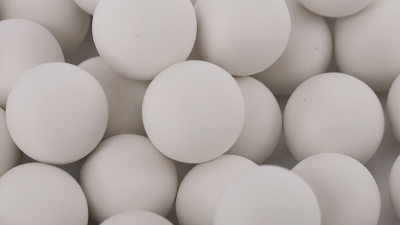
In the pursuit of maximizing grinding efficiency, the choice of grinding media plays a crucial role. Ceramic grinding balls, particularly those made from a zirconia/alumina/silicate composite powder, stand out due to their unique properties. The BCBBall-tec® BCB series exemplifies how light density and high performance can be achieved, enhancing the overall grinding process in high-performance applications.
Industry reports indicate that the utilization of ceramic grinding media can lead to significant improvements in milling efficiency. According to a study published by the International Journal of Advanced Manufacturing Technology, ceramic balls exhibit a lower wear rate and superior hardness compared to traditional materials, which translates to longer service life and reduced costs. Moreover, their minimal contamination levels are essential for industries where purity is paramount, such as pharmaceuticals and food processing.
Furthermore, the specific inertness and thermal stability of ceramic grinding balls make them suitable for various environmental conditions, offering flexibility across applications. A recent analysis from the Ceramic Engineering and Science Proceedings highlights that using zirconia-alumina composite balls can increase grinding effectiveness by up to 30%, allowing businesses to achieve better particle size distribution and improved product quality. Transitioning to high-performance ceramic media like BCBBall-tec® BCB not only enhances productivity but also sets a new benchmark for quality in grinding operations.
FAQS
: Ceramic jars, made from materials like alumina or zirconia, provide superior hardness and wear resistance, ensuring longer use without contamination and resulting in finer particle sizes and higher homogeneity in the final product.
Ceramic jars offer improved wear resistance and chemical stability, which minimize contamination and are ideal for high-energy operations, making them suitable for precise applications like planetary ball milling.
Minimizing contamination is crucial when working with sensitive materials, as impurities can compromise the quality of the milled product, especially in nanoparticle production.
The lightweight nature of ceramic jars allows for faster rotation and movement during milling, enabling higher speeds and better energy transfer without overloading the system.
The thermal stability of ceramics helps maintain consistent milling conditions, reducing the risk of overheating materials and preserving their properties for improved milling outcomes.
The size of the jar should align with the volume of material being processed, as mismatched sizes can adversely affect milling efficiency.
Using the appropriate grinding media in combination with ceramic jars enhances the size reduction process, leading to finer particles and improved reproducibility in mechanochemical applications.
Ceramic jars maintain material purity and reduce contamination risks, which is essential for precision in research and development tasks.
While epoxy resin jars can control heat, they may introduce impurities that compromise the quality of the milled product, making ceramic jars a better option for sensitive operations.
Ensuring the jar's size matches the material volume and using the correct grinding media are important practices that can significantly enhance milling effectiveness and result reproducibility.
Conclusion
Ceramic jars are pretty much essential when it comes to boosting the performance of planetary ball mills. They come with a lot of perks that really help boost milling efficiency. What’s cool is their unique composition—it’s not just about breaking down materials effectively, but these jars also tend to last longer than other types. Picking out the right ceramic jar for your planetary ball mill? Super important, really. It can directly influence how well the grinding goes and the quality of your end product.
At Pingxiang Baitian (Ball-tec) New Materials, we’ve got you covered with high-purity zirconia and alumina micro-crystalline ceramic grinding media. Our goal is to give our customers top-notch solutions for their milling projects. By using advanced materials, we make ceramic jars that don’t just perform really well but also stand the test of time, making them a total must-have in material processing.