Pingxiang Baitian New Materials Co., Ltd

Leave Your Message
0%

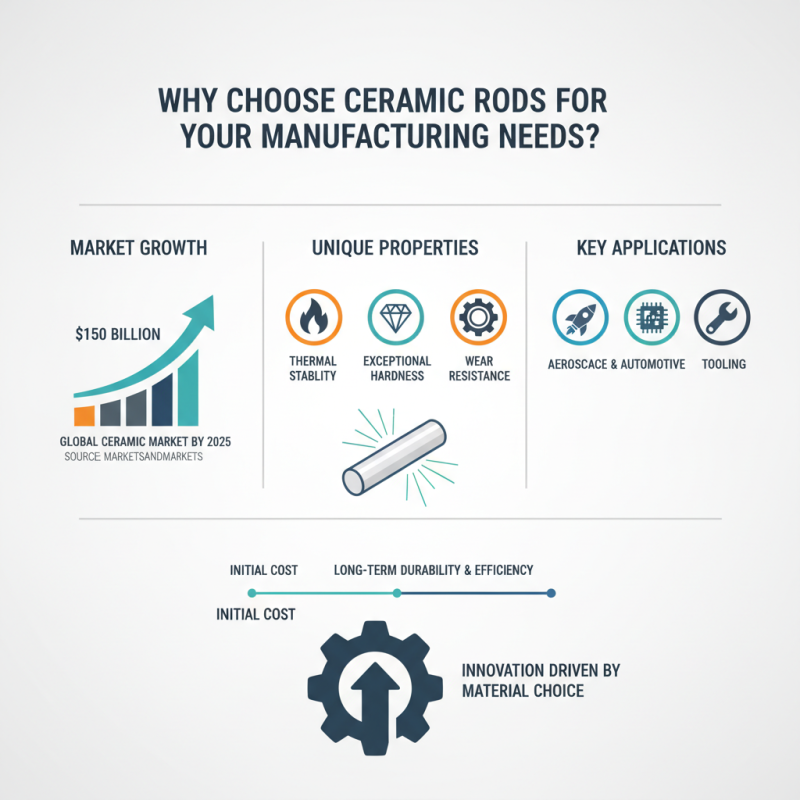
In today’s manufacturing world, choosing the right materials is more important than ever. Take ceramic rods, for example—they really stand out because of their unique properties. I read a report from MarketsandMarkets that predicts the global ceramic market will hit around $287 billion by 2025. That growth is mainly driven by what’s happening in tech and material science. These ceramic rods are pretty impressive—they handle heat like a champ, are super hard, and resist wear really well. That makes them perfect for a bunch of different uses.

But here’s the thing: manufacturing isn’t always straightforward when it comes to picking materials. Sometimes, folks overlook the benefits of ceramic rods. Yet, these rods can handle super high temperatures—something that’s a total game-changer in industries like aerospace and automotive. Plus, because ceramics can be customized, they’re great for tough environments where you need a bit of flexibility. Sectors like electronics and tooling really get a lot from these features. Still, not everyone fully takes advantage of what ceramic rods can do, which means missing out on some pretty big opportunities.

Choosing the right material really does make a difference. Companies like Advanced Ceramic Manufacturing stress how important it is to do thorough testing and validation. Sure, investing in ceramic rods might seem pricey at first, but when you think about their durability over the long haul, it’s honestly worth it. Making smart choices about materials can help companies run more efficiently and cut down on waste. Jumping on the ceramic rod bandwagon could even be a real game-changer for pushing innovation forward—no doubt about it.
Why Choose Ceramic Rods for Your Manufacturing Needs?

Benefits of Using Ceramic Rods in Manufacturing Processes

Ceramic rods have become increasingly popular in manufacturing due to their unique advantages. They offer remarkable toughness, which can enhance product durability. A recent industry report indicates that ceramic materials can withstand high temperatures up to 1,600 degrees Celsius. This property is particularly beneficial for processes that involve significant heat exposure.

Moreover, the wear resistance of ceramic rods is a critical factor. They outperform many metal counterparts in abrasive environments. According to a study by the International Journal of Advanced Manufacturing Technology, using ceramics can reduce wear rates by over 50%. This leads to lower maintenance costs over time, as machinery requires less frequent replacements or repairs.

However, ceramic materials are not without their challenges. They can be brittle, which may lead to failures under certain conditions. Companies must consider the application and environment carefully when selecting materials. Balancing these strengths and weaknesses is crucial for optimizing manufacturing processes. The reputation of ceramics relies on ongoing research and development, ensuring they meet evolving industrial demands.

Characteristics of Ceramic Materials that Enhance Manufacturing

Ceramic materials have unique characteristics that enhance manufacturing processes significantly. Ceramics are known for their exceptional hardness, wear resistance, and ability to withstand high temperatures. For instance, Zirconia Ceramic Balls exhibit a high level of toughness, making them ideal for applications such as bearings and valves. According to a recent industry analysis, the demand for such materials has increased by over 20% in the last five years due to their efficiency and craftsmanship.

Additionally, ceramics possess excellent thermal stability. This property enables manufacturers to operate in extreme environments without compromising material integrity. Reports indicate that industries using ceramic rods have seen a reduction in downtime by approximately 15%. Such reliability directly correlates to improved production rates and reduced operational costs.

Tip: When selecting ceramic materials, consider the specific requirements of your application. Assessing the temperature range and load-bearing capabilities can significantly impact the longevity of the components.

While ceramic rods show remarkable advantages, they also require careful handling. Their brittleness can lead to breakage under certain conditions. It's essential to ensure proper installation and maintenance in high-stress environments. Balancing these factors will maximize the benefits of materials like zirconia ceramic ball, enhancing overall performance.

Why Choose Ceramic Rods for Your Manufacturing Needs? - Characteristics of Ceramic Materials that Enhance Manufacturing

Characteristic Description Impact on Manufacturing
High Hardness Ceramic materials are extremely hard, providing durability and wear resistance. Reduces the need for frequent replacements, lowering operational costs.
Thermal Stability Retains its properties at elevated temperatures, resisting thermal shock. Suitable for high-temperature applications, expanding process capabilities.
Chemical Resistance Resistant to corrosion and chemical reactions in harsh environments. Increases equipment lifespan and reduces maintenance frequency.
Low Density Lightweight compared to metals, leading to easier handling. Improves energy efficiency during transport and installation.
Electrical Insulation Non-conductive properties make ceramics ideal for electrical components. Enhances safety and performance in electrical applications.
Dimensional Stability Maintains shape and size under varying conditions and stress. Ensures consistent quality in precision manufacturing processes.

Applications of Ceramic Rods in Various Industries

Ceramic rods are increasingly vital in various industries. Their unique properties make them suitable for high-temperature applications. In the aerospace sector, for instance, ceramic rods are used in combustion chambers. They endure extreme conditions while maintaining structural integrity. According to a report by MarketsandMarkets, the global ceramics market is projected to reach $300 billion by 2025. This growth reflects the rising demand for materials that can withstand harsh environments.

In the electronics industry, ceramic rods serve essential roles. They are found in insulators and substrates for circuit boards. Their electrical insulation capabilities are unparalleled. A study by Smithers Pira states that demand for advanced ceramics in electronics could grow by 8% annually. However, the production process raises concerns. Manufacturers must ensure precision to prevent defects. A faulty ceramic rod can lead to failures in critical applications, causing significant losses.

The medical field also benefits from the use of ceramic rods. These materials are used in orthopedic implants and dental applications. Their biocompatibility is crucial for patient safety. However, challenges remain regarding their long-term performance in the body. Ongoing research is needed to address these issues and improve reliability. Overall, ceramic rods demonstrate versatility across sectors, yet continuous innovation is essential for maximizing their potential.

Applications of Ceramic Rods in Various Industries

Comparative Analysis: Ceramic Rods vs. Metal Rods

Why Choose Ceramic Rods for Your Manufacturing Needs?

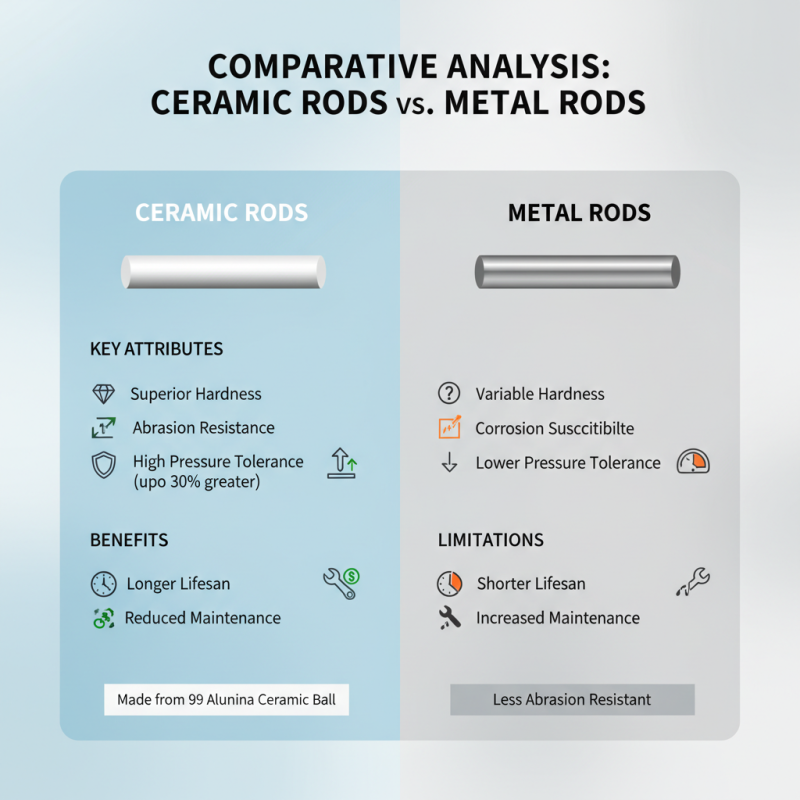
Ceramic rods and metal rods serve distinct purposes in manufacturing. When comparing these two materials, significant differences emerge. Ceramic rods, particularly those made from 99 Alumina Ceramic Ball, provide superior hardness. This feature makes them ideal for applications that require abrasion resistance. Research indicates that ceramics can withstand pressures up to 30% higher than some metals. This durability results in longer life spans and reduced maintenance costs.

On the other hand, metal rods often excel in tensile strength. They are typically more ductile and can absorb shocks better than ceramics. However, they may corrode, especially in harsh environments. According to industry reports, nearly 20% of metal rod failures result from corrosion. In contrast, ceramics offer excellent thermal stability and resistance to chemical interactions. This makes them valuable in industries like aerospace, where both weight and performance matter.

While ceramic rods have many advantages, they lack some ductility and flexibility that metals can offer. This limitation can lead to breakage under high-stress situations. Users need to weigh these factors carefully. The choice between ceramic and metal rods ultimately depends on specific manufacturing needs and environmental conditions.

Cost-Effectiveness of Ceramic Rods in Long-Term Production

When considering materials for manufacturing, cost-effectiveness is key. Ceramic rods offer a compelling solution in this regard. Their durability helps reduce replacement costs over time. Many manufacturers find that although the initial investment is higher, the long-term savings are significant. This arises from less frequent need for replacement and maintenance.

In addition, Ceramic Grinding Media proves beneficial in many production environments. It tends to provide longer wear life compared to other materials. Consequently, companies experience fewer interruptions in production. However, some users may struggle with the brittle nature of ceramics, leading to potential breakage. Effective handling and proper equipment choices are crucial to maximizing their benefits.

The performance consistency of ceramic rods also merits attention. They provide reliable results in various applications, making them a versatile option. Still, one must acknowledge the potential for suboptimal performance if not used correctly. Understanding the right conditions for use is essential for achieving the desired outcomes. In the world of manufacturing, it's about balancing initial costs with overall efficiency and effectiveness.

Impact of Ceramic Rods on Product Quality and Durability

When considering materials for manufacturing, ceramic rods stand out due to their exceptional impact on product quality and durability. These rods offer high strength and resistance to wear, which is crucial in various applications. The hardness of ceramics helps in maintaining dimensional stability, ensuring that parts perform as intended over time. This reliability contributes to the overall longevity of products.

One key factor is their thermal stability. Ceramics can withstand high temperatures without degrading. This property is essential for manufacturing processes that involve heat. Additionally, ceramics are resistant to chemicals, making them suitable for harsh environments. Products made with ceramic rods are less likely to fail, directly impacting customer satisfaction.

Tips for choosing ceramic rods include assessing the specific application needs. Understand the conditions the rods will face, such as temperature fluctuations or corrosive substances. Consulting with experts in material science can provide valuable insights. Always consider the manufacturing process and how the material will integrate. Sometimes, trial and error is necessary to find the right balance between cost and performance. Learning from feedback and adapting designs ensure ongoing improvement.

Future Trends in the Use of Ceramic Rods in Manufacturing

Why Choose Ceramic Rods for Your Manufacturing Needs?

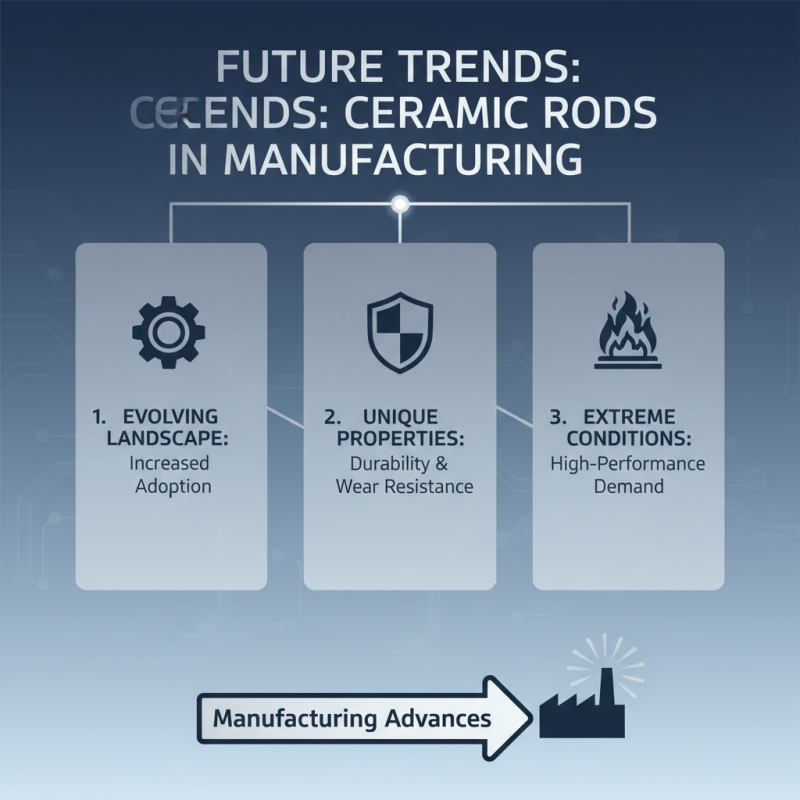
The manufacturing landscape is evolving. Ceramic rods are becoming increasingly popular due to their unique properties. These rods offer high durability and resistance to wear. As industries advance, the demand for materials that can withstand extreme conditions grows. This is where ceramic rods shine.

Future trends indicate a surge in the use of Alumina Ceramic Grinding Balls alongside ceramic rods. These grinding balls enhance efficiency in various manufacturing processes. They provide excellent grinding capabilities and reduce contamination risks. With sustainability becoming a priority, ceramic materials are favored for their eco-friendly attributes. Yet, the challenge lies in balancing performance with cost. Manufacturers must reflect on their investment in high-tech ceramic solutions.

The adaptability of ceramic rods can’t be overstated. Their applications span multiple sectors, including aerospace and electronics. However, quality control remains a concern. Manufacturers must ensure that their ceramic rods meet industry standards. Innovations in ceramics could lead to new formulations. There’s always room for improvement in both processes and materials. The future will likely reveal more about the potential of ceramics in manufacturing.

FAQS

: What are the main differences between ceramic rods and metal rods?

: Ceramic rods are harder, offering better abrasion resistance, while metal rods excel in tensile strength and shock absorption.

Why are ceramic rods cost-effective in manufacturing?

Their durability leads to lower replacement costs over time, despite a higher initial investment.

What is a potential drawback of using ceramic rods?

They can be brittle, which may lead to breakage under high-stress situations.

How do ceramic rods perform in high-temperature environments?

They provide excellent thermal stability, making them suitable for demanding applications like aerospace.

What issues do metal rods face in harsh environments?

Corrosion is a common problem, with nearly 20% of failures attributed to this issue.

How can users maximize the benefits of ceramic rods?

Proper handling and suitable equipment choices are vital to avoid breakage and achieve optimal performance.

Are ceramic rods versatile for different applications?

Yes, they offer reliable performance across various fields, but conditions for use must be understood.

Can metal rods absorb shocks well?

Yes, metal rods typically have better shock absorption compared to ceramics, adding to their utility.

What are the maintenance benefits of ceramic rods?

Their long lifespan leads to reduced maintenance needs, which can save costs in the long run.

Is the performance of ceramic rods always consistent?

Not always; improper use can lead to suboptimal results, highlighting the need for careful implementation.

Conclusion

Ceramic rods have emerged as a superior choice in manufacturing processes due to their unique characteristics and benefits. These materials offer exceptional hardness, thermal resistance, and chemical inertness, making them highly suitable for various industrial applications. By comparing ceramic rods to metal rods, it becomes evident that ceramic materials often provide greater durability and longevity, which in turn enhances product quality and reduces maintenance costs over time.

Moreover, the cost-effectiveness of ceramic rods shines through in long-term production scenarios, where their performance can lead to substantial savings. As industries continue to innovate, the future trends in the use of ceramic rods promise to focus on advanced applications and enhanced manufacturing solutions, solidifying their role as a key component in modern manufacturing practices.
Liam

Liam

Liam is a dedicated marketing professional at Pingxiang Baitian New Materials Co., Ltd., where he leverages his extensive knowledge of the company's innovative products to drive effective communication and engagement. With a deep understanding of the materials industry, Liam plays a crucial role in......
Previous Top 10 Plastic Packing Tips for Global Buyers to Consider